Homemade raw milk cream cheese is definitely something I wish I would have started making sooner. I make homemade raw milk cottage cheese nearly every week and little did I know, I was literally just one step away from turning that into delicious raw milk cream cheese!
I am a huge advocate for raw milk and love making my own dairy products with it as much as possible. This recipe is so simple and delicious I’m happy to say I will definitely be making the switch from store-bought cream cheese to this deliciously smooth, cheesy and creamy recipe!
Other recipes for homemade cream cheese call for ingredients most of us don’t have on hand, such as rennet, enzymes, cheese culture etc. But truthfully, there’s no need to complicate things! You can get fresh, yummy, cream cheese in under an hour just by combining three basic ingredients you probably already have in your kitchen. Raw milk, distilled white vinegar and salt. Though you could kick it up a notch by adding in some additional spices.
Additionally, for an even creamier raw milk cream cheese, you could try replacing some of the milk with some raw cream. But, this recipe is delicious as is too!

Check Out My Other Raw Milk Recipes!
Why Make Raw Milk Cream Cheese?
Why bother taking the time to make homemade cream cheese when you could just go to the store and buy it? Well, there’s a couple reasons it’s better to make it yourself! First, this recipe is just 3 simple ingredients. There’s no added stabilizers such as Guar gum, Carob bean gum, or Xanthan gum and no harmful preservatives.
In addition, it honestly just tastes better! I loooove cream cheese, everything bagels with cream cheese, carrot cake with cream cheese frosting, even baked chicken breasts with cream cheese and herbs. And this raw milk cream cheese recipe truly takes cream cheese to the next level.
What Is Raw Milk?
Raw milk is milk that has not been pasteurized through a heating and cooling process.
Raw milk can come from any animal, the most popular being dairy cattle, goats, sheep, yaks, and even camels!
Only about 1-3% of the population drinks raw milk.
What Is Homogenization?
Homogenization is the process of passing milk under high pressure through tiny holes which decreases the diameter and increases the number of surface area of the fat globules. This ensures that the molecules do not regroup and form a cream layer on top of the milk, which you do get with raw milk.
Testimonial From an Osteopathic Physician D.O. On Raw Milk and It’s Benefits.
Joseph Mercola, DO, osteopathic physician and author, in an Apr. 16, 2016 article for Mercola.com titled “Raw Milk and Cheese Are Undergoing a Renaissance as Artisanal Foods Rise in Popularity,” wrote:
“[Pasteurizing milk] destroys enzymes, diminishes vitamins, denatures fragile milk proteins, destroys vitamin B12 and vitamin B6, kills beneficial bacteria, and promotes the growth of pathogens.
Meanwhile, raw milk contains:
- Healthy bacteria that are beneficial for your gastrointestinal tract
- More than 60 digestive enzymes, growth factors, and immunoglobulins (antibodies). These enzymes are destroyed during pasteurization, making pasteurized milk harder to digest
- Phosphatase, an enzyme that aids and assists in the absorption of calcium in your bones…
- Beneficial raw fats, amino acids, and proteins in a highly bioavailable form, all 100 percent digestible
- Vitamins (A, B, C, D, E, and K) in highly bioavailable forms. Also has a balanced blend of minerals (calcium, magnesium, phosphorus, and iron) whose absorption is enhanced by live lactobacilli.”
Can I Use Pasteurized Milk?
Yes, pasteurized milk will work but I do recommend using whole milk, as 2% or nonfat will result in a very thin, liquidy cheese. Some people may want to stick to pasteurized milk for many different reasons, and that’s fine as well! No adjustments will need to be made to the recipe.
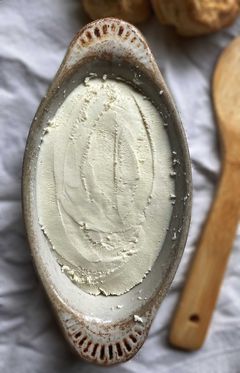
Alright, let’s get started!
Equipment Needed:
- Blender
- Large pot
- Medium sized bowl
- Small sized bowl
- Colander
- 3/4 Measuring cup
- Teaspoon measuring spoon
- Tablespoon measuring spoon
- Slotted spoon
- Cheesecloth or a clean kitchen towel
Ingredients:
- 1 Gallon of raw or pasteurized whole milk. (Don’t use ultra-pasteurized milk)
- 3/4 Cup of distilled white vinegar
- 1 Teaspoon of salt or to taste (optional)
- Dry herbs/onion/garlic powder (optional)
Directions:
Step 1: Start by rubbing an ice cube, or cold water for about 30 seconds on the inside bottom of your large pot. Next, pour in the gallon of raw milk and slowly heat to about 190°F/88 °C or just until it begins to boil. Stir often so the milk doesn’t scorch or burn to the bottom of the pan. Remove from heat and pour in the 3/4 cup of vinegar. Lightly stirring to incorporate. Do not over-stir. Cover and allow to sit for 30 minutes.
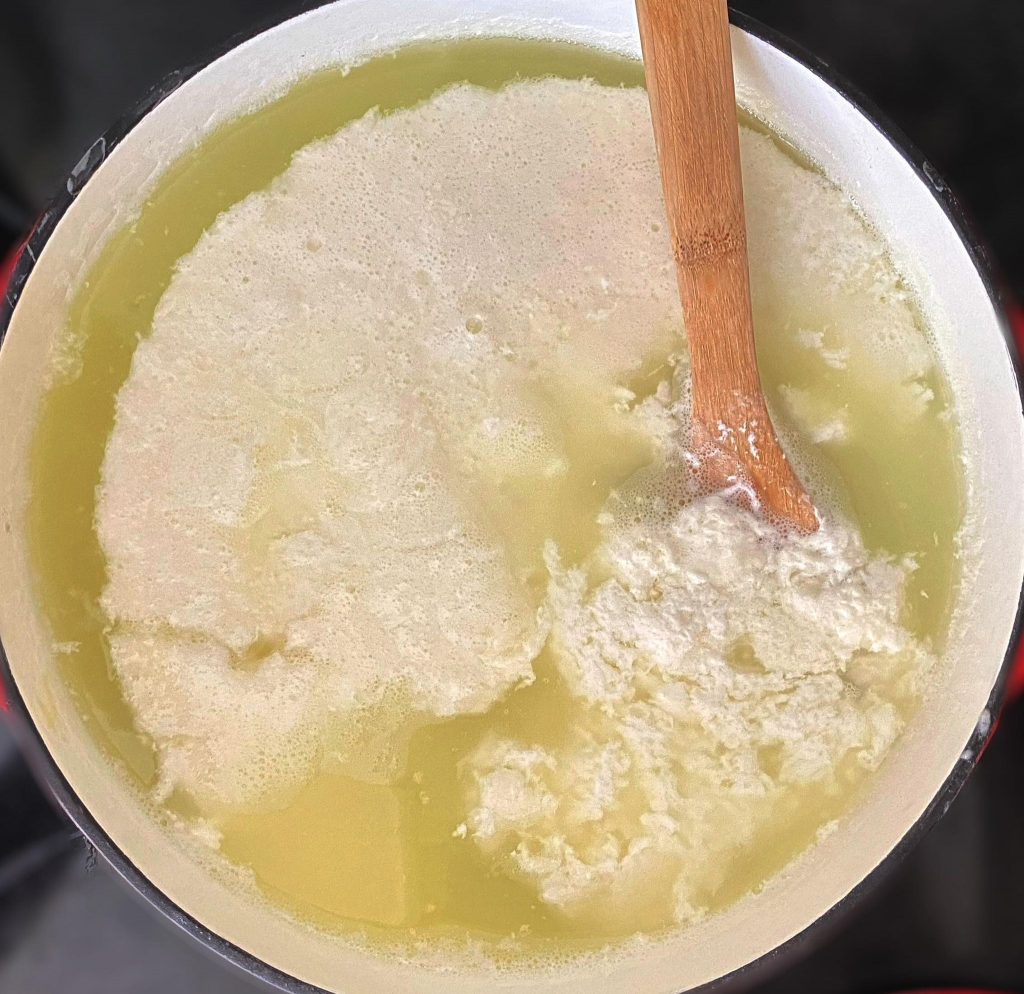
Step 2: Line the colander with doubled cheesecloth or a clean kitchen towel, and place over a medium sized bowl. Using your slotted spoon, scoop up all the solids out of the whey and place in the colander. Allow to drain for 20 minutes.
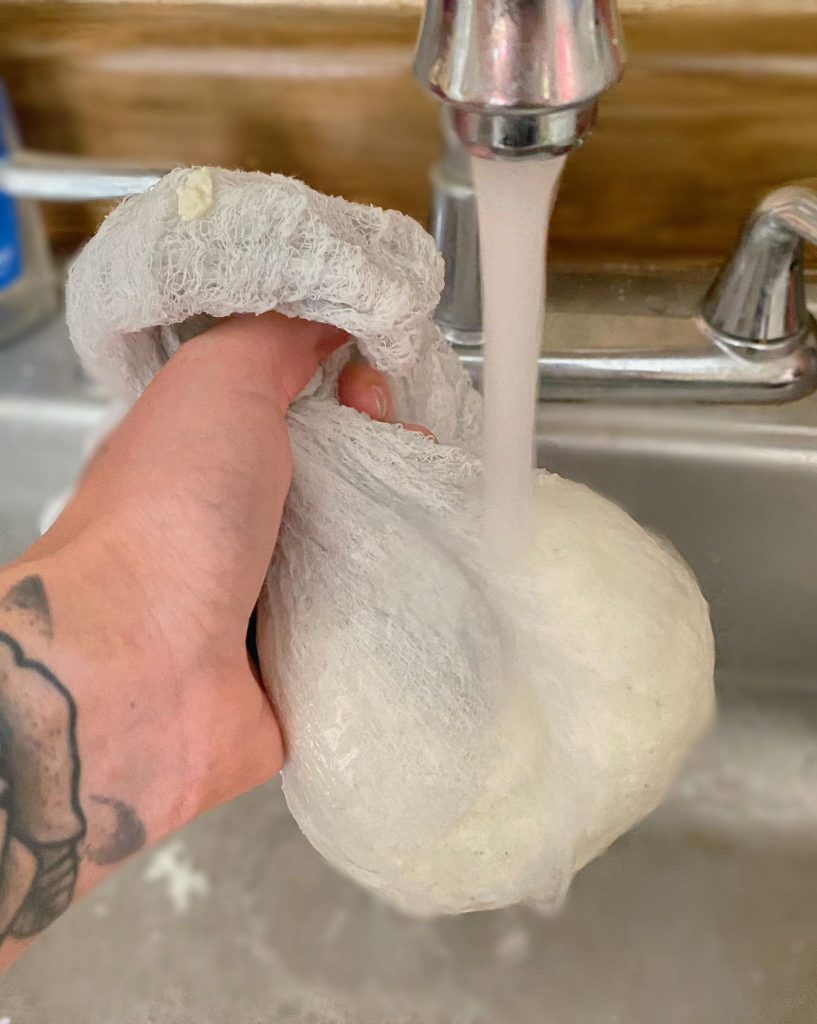
Step 3: Gather the ends of the cheesecloth together, forming a tight ball of cheese. Run the ball of cheese under cold water, gently squeezing and kneading until all the warm water from the cheese-ball runs out and it feels cool to the touch.
Step 4: Remove the cheese from the cloth and break it up into about 4-5 smaller chunks. Place the chunks into a blender along with the teaspoon of salt. This would also be the time to add in any herbs if you’d like. Blend for 2-3 minutes. This time may vary depending on your blender. You will notice your cheese breaking up into smaller pieces at first but after 1-2 minutes it will begin to turn into smooth and creamy homemade cream cheese! Transfer to a glass container with a lid and store in the fridge for up to a week!
Ways To Enjoy Your Homemade Raw Milk Cream Cheese
- Spread on top of a bagel
- Make some homemade cream cheese frosting for carrot cake, muffins or even cookies
- Homemade cheesecake
- Add to homemade mac and cheese
- Make a cream cheese and herb dip
- Swirl some into brownies
- Try some homemade cheese Danishes
- Make some stuffed chicken breasts. One of my faves!
Pin It!
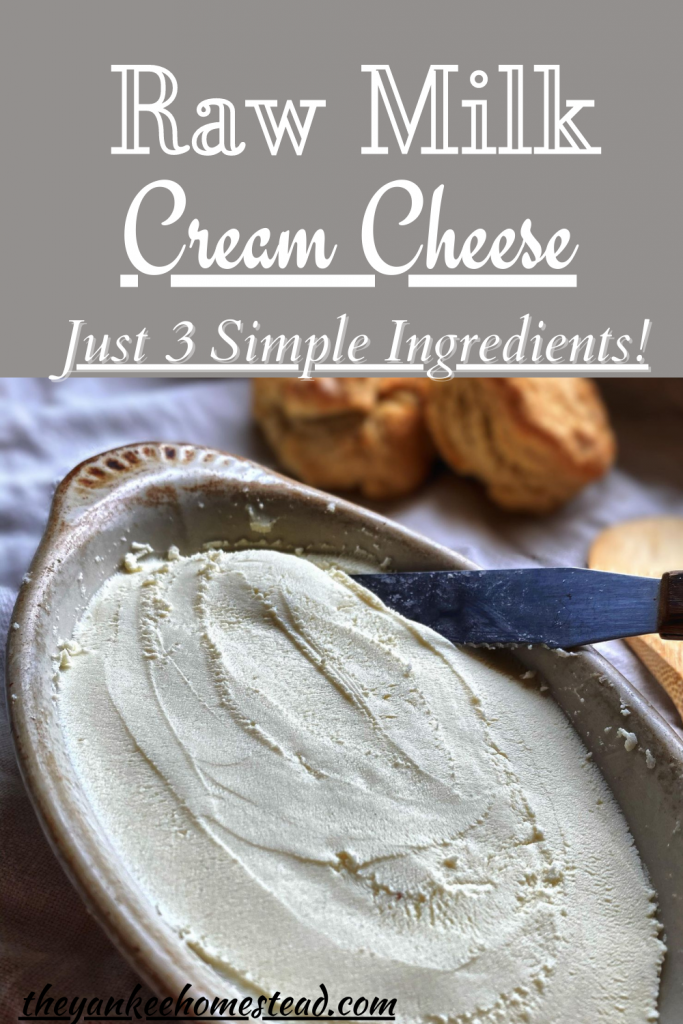
Raw Milk Cream Cheese
Equipment
- Cheesecloth
- Blender
- Large pot
- 3/4 Measuring cup
- Teaspoon measuring spoon
- Tablespoon measuring spoon
- Slotted spoon
Ingredients
- 1 Gallon Raw or pasteurized whole milk.
- 3/4 Cup Distilled white vinegar
- 1 Tsp Salt (Optional)
- 1 Pinch Dry herbs or spices (Optional)
Instructions
- Start by rubbing an ice cube, or cold water for about 30 seconds on the inside bottom of your large pot. Pour in the gallon of raw milk and slowly heat to about 190°F/88 °C or just until it begins to boil. Stir often so the milk doesn’t scorch or burn to the bottom of the pan. Remove from heat and pour in the 3/4 cup of vinegar. Lightly stirring to incorporate. Do not over-stir. Cover and allow to sit for 30 minutes.
- Line the colander with doubled cheesecloth or a clean kitchen towel, and place over a medium sized bowl. Using your slotted spoon, scoop up all the solids out of the whey and place in the colander. Allow to drain for 20 minutes.
- Gather the ends of the cheesecloth together, forming a tight ball of cheese. Run the ball of cheese under cold water, gently squeezing and kneading until all the warm water from the cheese-ball runs out and it feels cool to the touch.
- Remove the cheese from the cloth and break it up into chunks small enough to fit into the blender. Place the chunks into a blender along with the teaspoon of salt. This would also be the time to add in any herbs if you'd like. Blend for 2-3 minutes.
Leave a Reply